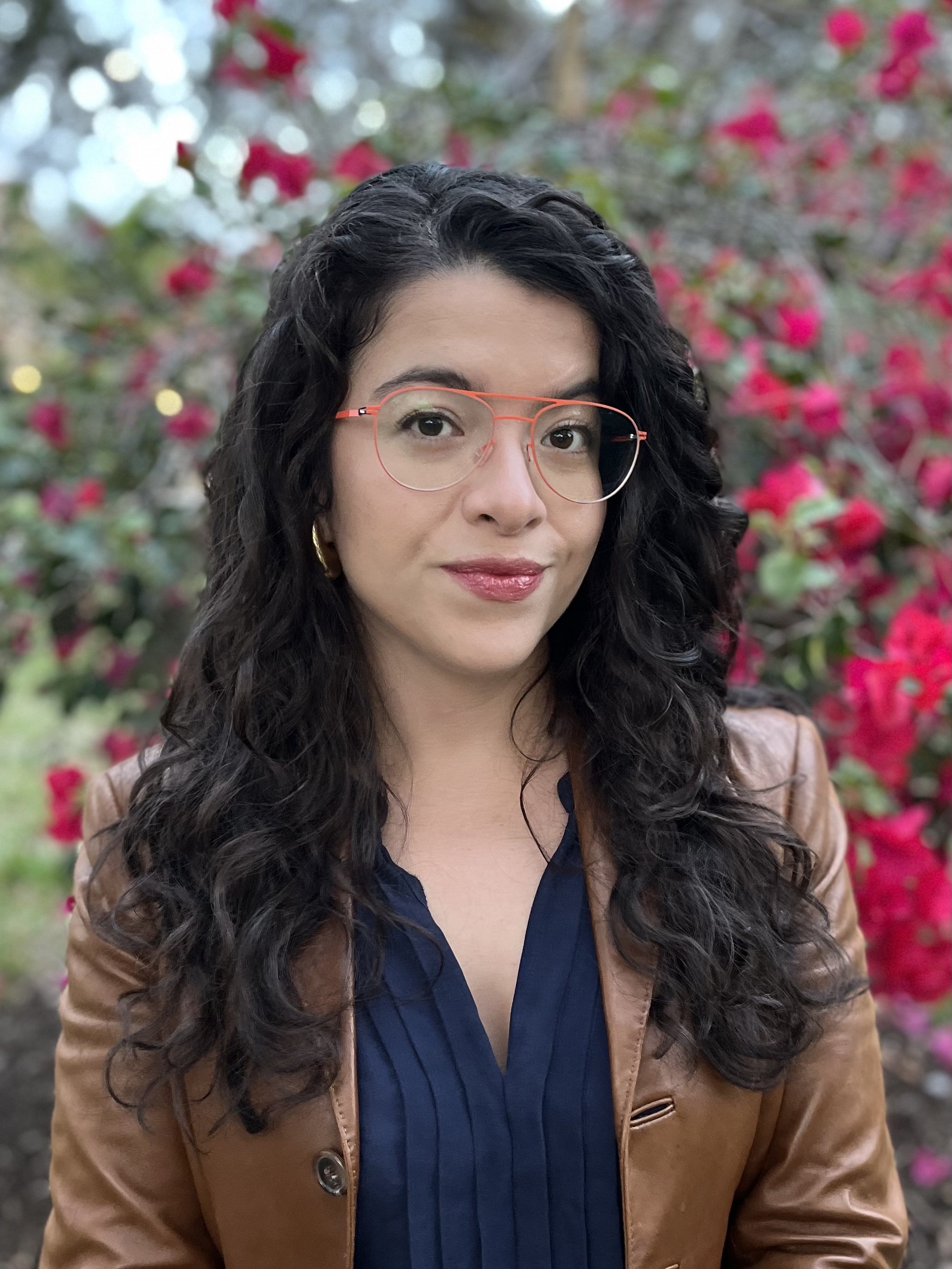
Diana Flores Ruíz’s research on visuality and US-Mexico border infrastructure encompasses a constellation of media objects produced by federal and state agencies, defense technology companies, private prisons, photojournalists, mainstream film studios, amateur cultural producers, community advocates, and artists of color. She weaves cultural and historical analyses of these media objects together in order to better understand the media ecologies shaping the forms of capture and creative resistance of historically exploited border communities and noncitizens. By bridging studies of carceral optics and liberatory visual practices, Dr. Ruíz situates readings of emergent forms of data capture within a longer historical continuum of settler colonial visual regimes and creative, community-based resistance.
Her writing appears in Feminist Media Histories, Critical Ethnic Studies, Film Quarterly, and the Journal of Cinema & Media Studies, among other venues.
Beyond peer-reviewed publications, Dr. Ruíz is working on two public-facing digital humanities pilots: Mapping Discriminatory Media, which historicizes and critically curates anti-immigrant media from the early 2000s, and Recovering Latinx Resistance, which exhibits historical and crowd-sourced acts of Latinx youth defiance against border regimes. Through the support of the Walter Chapin Simpson Center for the Humanities at the University of Washington, she has co-facilitated a crossdisciplinary working group on Digital Border Media & Technology.
Dr. Ruíz earned her PhD and MA in Film & Media Studies at the University of California, Berkeley. At Duke University, she received her BA in Women’s Studies as a Mellon Mays Fellow.